The Liminal Letter #1
5 Myths About Change That Limit Us and Our Teams

This newsletter is about working with personal, team, and organizational change. Seven years ago, I founded a company that explored how to learn and teach in a world where the only constant is change — and that was even before the pandemic, wars, and the rise of AI. I was fascinated by the idea that each of us can be our own learning designer, and that we can create environments where people have multiple opportunities to grow.
I closed that company earlier this year and made a career shift from education into psychotherapy, coaching and organizational practice. But the topic of change still drives me. I believe systemic and individual change is something we all need to get more comfortable with — and along the way, we’ll discover a lot.
Today’s topic: 5 common assumptions about change that hold us back.
Sometimes companies approach me for change management training. And from their initial requests, I often see that the way we think about change, the way we conceptualize it — doesn’t match the way we actually experience it.
Belief 1: Engineering approach to change.
We think that change is a linear process with a clear plan, starting conditions, and a predictable end result — like following an instruction manual.
This belief is rooted in seeing people and organizations as “machines” that will produce the right outcome if we just take the right steps. That’s an engineering approach to change.
A linear process can work if the situation is simple and the context is stable — like following a recipe you already know will work. But in environments full of uncertainty, unpredictability, and interconnected factors, linear planning quickly breaks down.
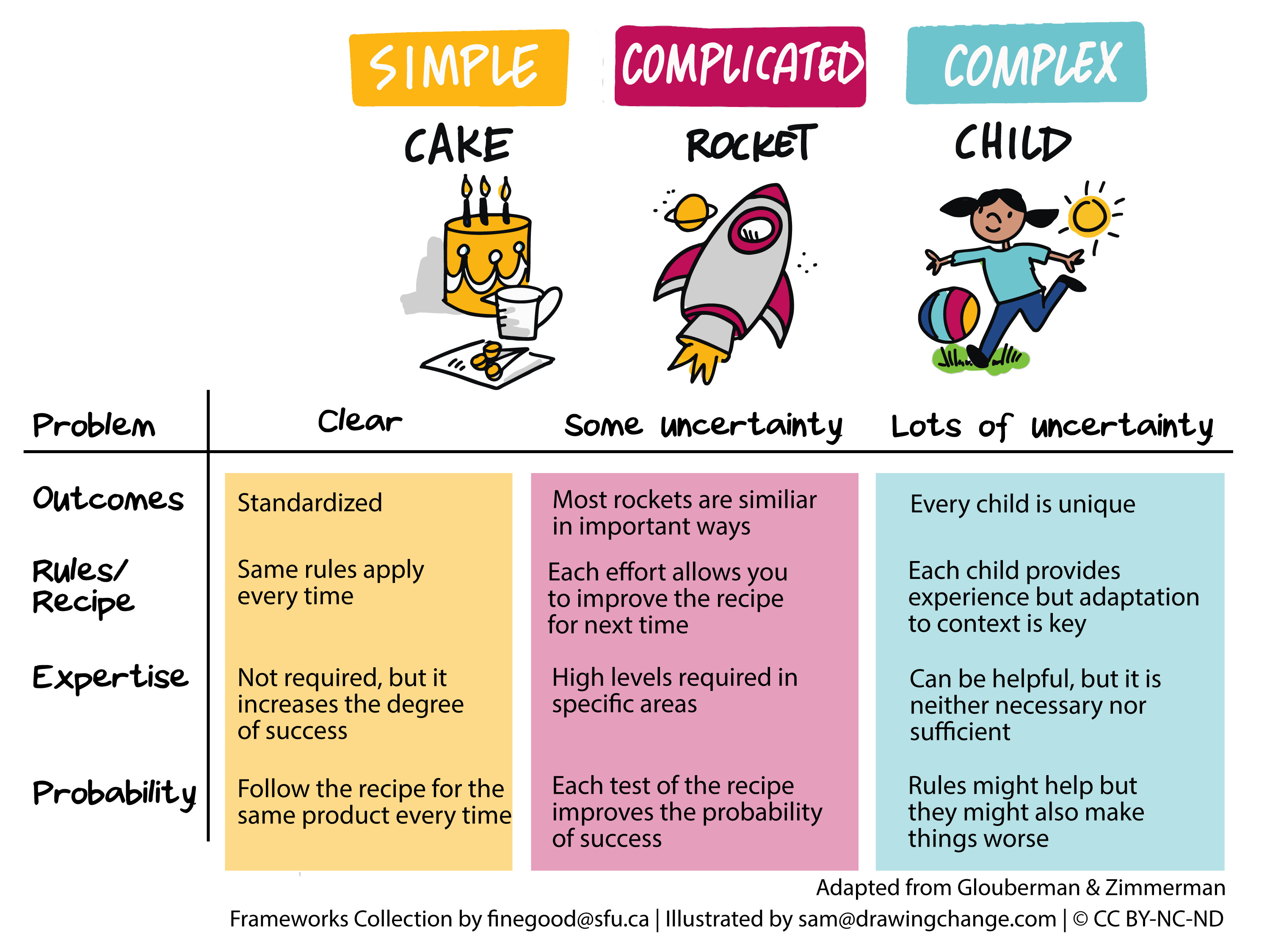
I like the metaphor that Marie-Anne Chidiac offers in her book: an organization can be seen not as a machine, but as a living system. If an organization or team is a living system, like a biological one, our role then is to create the right environment for change to happen — to be gardeners, not engineers.
Belief 2: Change follows a clear vision of the future.
Sometimes that’s true, in situations where best practices already exist. If we want to bake a pie, we usually don’t reinvent the recipe; we find one online, buy the ingredients, and start cooking.
But more often, our business is in complex contexts. We can not predict exactly how AI will reshape our work, or what their professional life will look like after moving to a new country. Instead of having a fixed end point, we start from where we are and move forward step by step — often like in a fog, feeling our way toward the next viable action. (Or we wait for the fog to clear, but that has its own risks.)
Belief 3: The leader decides and cascades their vision top-down.
The “hero leader” narrative is very appealing. Such a leader inspires a team, often appears at just the right moment and helps the team navigate change in difficult times. This narrative makes us feel special, but it also limits us. Expertise and knowledge are mostly distributed across the team, not concentrated in one person. Teams are often closer to the reality of their work, interacting directly with clients and the environment, while the leader may be one step removed.
Real change happens through dialogue and collaboration, and initiatives can emerge from the bottom up. Several teams may experiment in parallel, even taking opposite approaches, until something works — and that apparent chaos is often where true innovation is born.
Belief 4: Change is always visible and measurable.
Yes, there’s a visible side to change. But often, it’s the invisible shifts (like changes in relationships within a team) that matter most.
I like the metaphor of building muscle. Workouts as a visible part of a change process are just a stimulus, a positive stress. The actual muscle growth happens later, in rest, if the body has enough nutrients. Similarly, in organizations, change often happens during moments of reflection, dialogue, and integration. Every significant change in a society, organization, or team is built on countless conversations.
Belief 5: Resistance and emotions are a problem.
If we see organizations as machines, then emotions look like “resistance” and something to be ignored. But feelings, intuition, and bodily responses are also forms of knowledge. Even in the Western paradigm, where explicit knowledge tends to dominate, tacit knowledge holds equal value.
Resistance can be a valuable signal about team dynamics that we need to address. Paying attention to the emotional layer helps us notice patterns and connections we might otherwise miss, and that can lead to innovation.
A short practice for you or your team:
Reflect on these questions:
How do you perceive change? Which of the beliefs above resonate with you?
Think about your past experiences with change — how did they actually happen?
Which beliefs matched your real experience, and which didn’t?
How do these beliefs shape your current approach to change?
You can explore this individually, or discuss it with your team to compare experiences.
Why “The Liminal Letter”?
In change we often try to find balance between two states:
The anxiety that comes from facing an uncertain future.
The comfortable disconnection that comes from pretending nothing’s changing.
That in-between space where we’re open to what’s emerging — is called liminal space.
This newsletter will land in your inbox every 1–2 weeks, probably until my inspiration runs out.
📩 Feel free to share your questions, comments, or feedback in the comments.
For coaching or consulting, you can reach out to me through my website.
And don’t forget to follow my blog on LinkedIn for more reflections on change.